El Dorado
El Dorado is one of history’s most enduring legends, a tale of gold, discovery and a hidden land of extraordinary wealth somewhere in the vast landscapes of South America.
Location
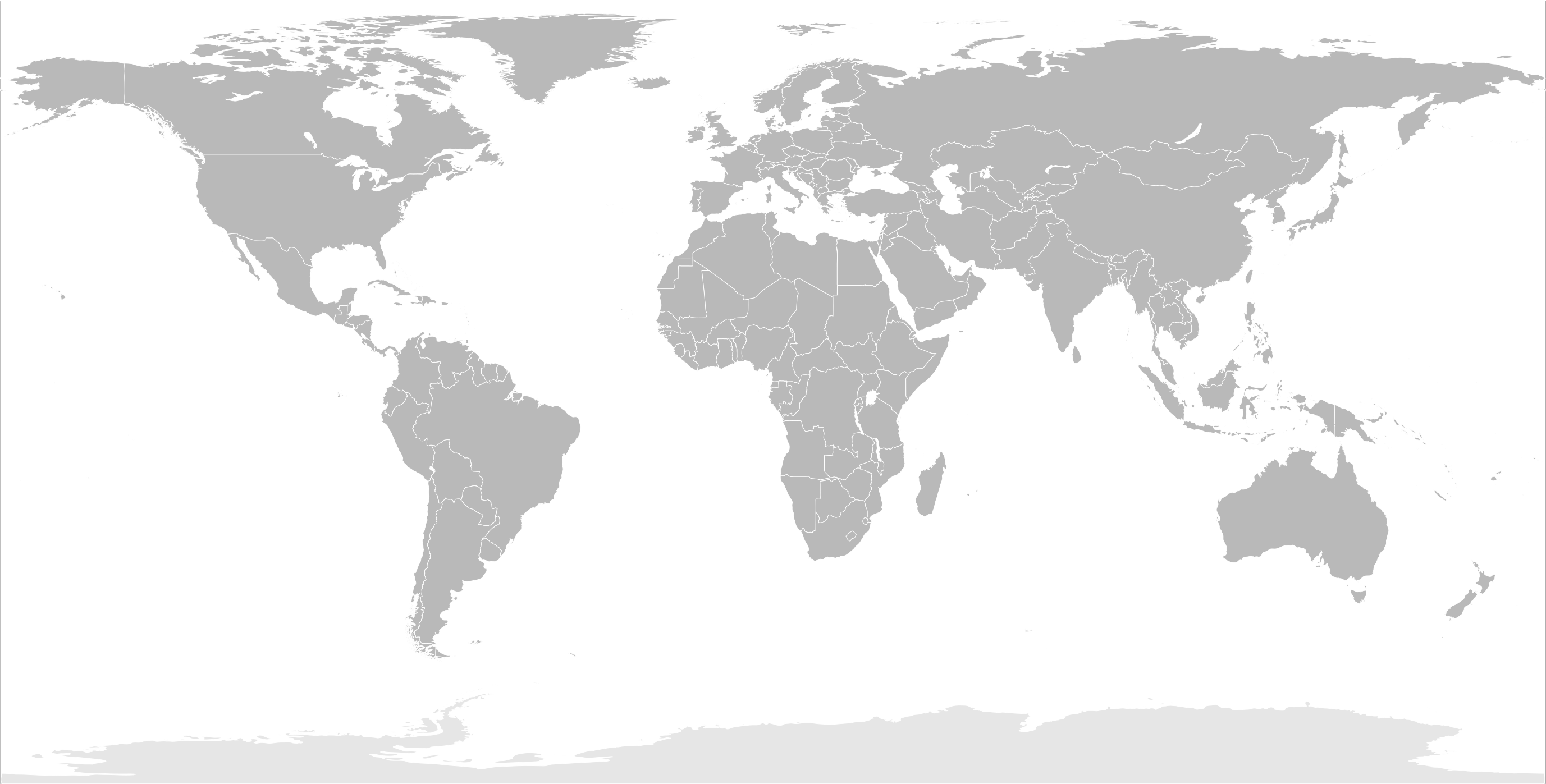
Timeline
Before European Contact
The Sacred Lake
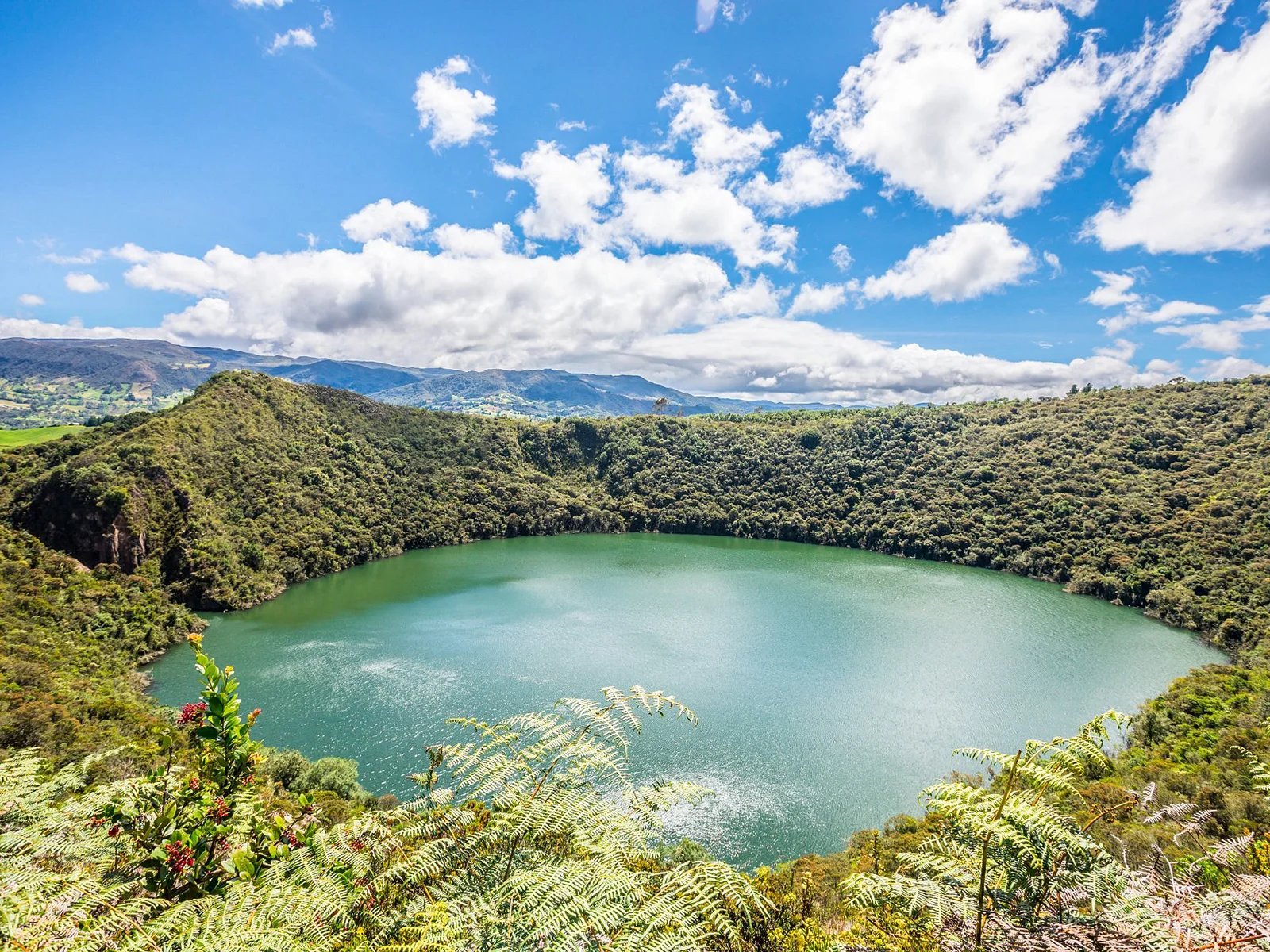
Lake Guatavita formed part of a sacred Muisca landscape where ritual offerings were made, traditions that would later become closely connected with the legend of El Dorado.
1537
The Spanish Encounter the Muisca
With stories of El Dorado already circulating, Gonzalo Jiménez de Quesada and his expedition enter Muisca territory, bringing the Spanish into the region that would become central to the legend.
1572
Royal Permission to Drain Guatavita
Antonio de Sepúlveda receives royal authorisation to extract gold, silver and precious stones from Lake Guatavita, setting the stage for his later large-scale attempt to cut into the lake’s rim.
1584–1595
The Legend Moves East
With Antonio de Berrío's expeditions, the search pushes through the Llanos and Orinoco towards Guiana, where El Dorado becomes increasingly associated with Manoa, a great city of extraordinary wealth.
1595, 1617–1618
Raleigh’s Search for El Dorado
Walter Raleigh mounts two expeditions to Guiana in pursuit of El Dorado, exploring the Orinoco and searching for the great golden city of Manoa. His final expedition ends in disaster.
1909–1912
Guatavita Is Drained
A British company digs a tunnel beneath Lake Guatavita to lower its waters in search of the legendary treasure. By 1912 the lake is almost completely drained, but the exposed mud hardens like concrete, making excavation difficult.
1969
A Legend Cast in Gold
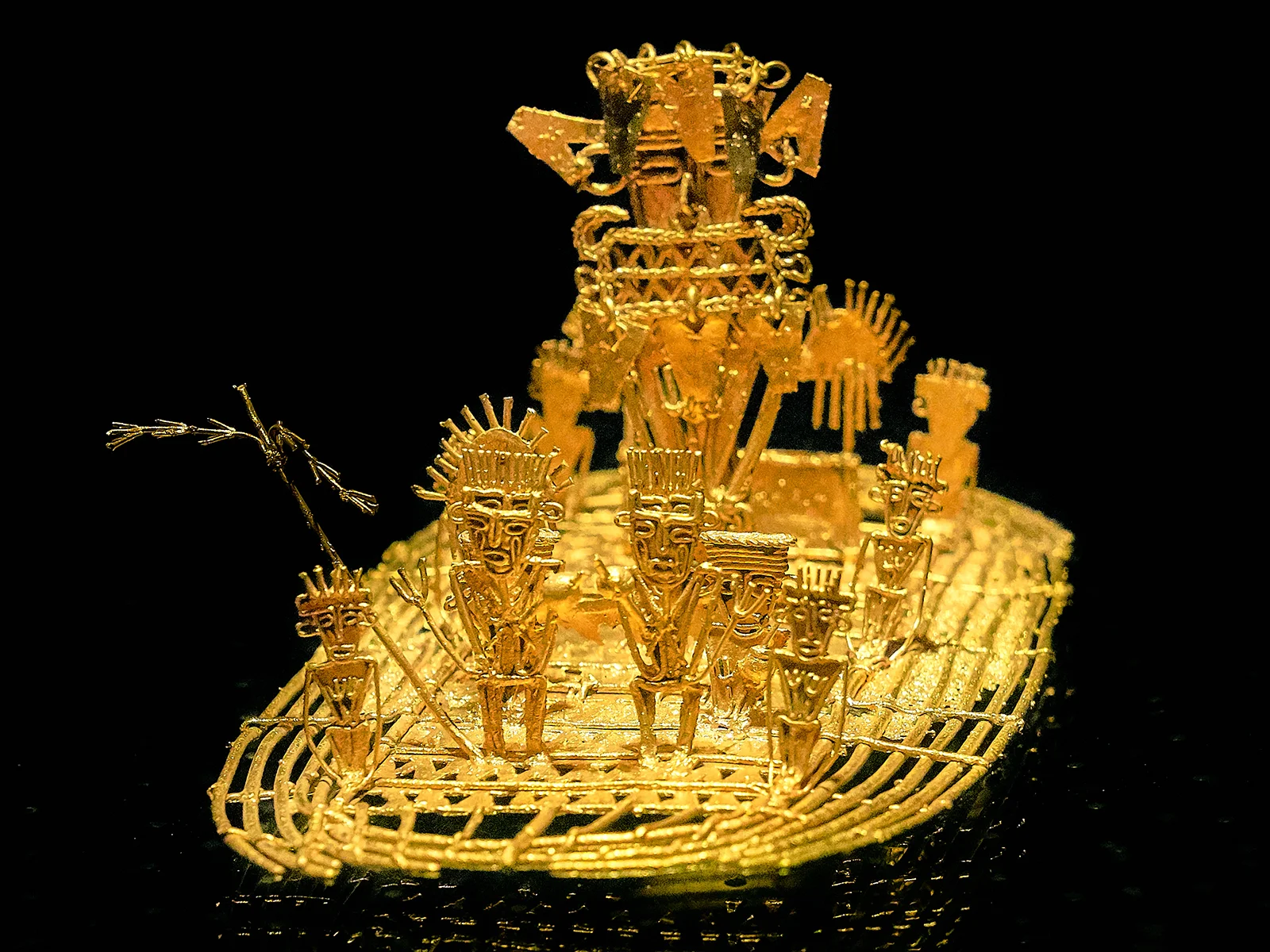
A remarkable gold raft is discovered in a cave near Pasca, Cundinamarca. The Muisca votive piece depicts a ceremonial scene closely associated with the traditions surrounding El Dorado.
2009
Archaeology Returns to Guatavita
An archaeological survey around Lake Guatavita uncovers evidence of a Muisca shrine and ritual offerings, revealing more about the sacred landscape at the heart of the El Dorado legend.
Evidence
The surviving record
One defining artefact behind a larger legend
The Muisca Raft is one of the strongest surviving material links between El Dorado and a Muisca ceremonial tradition. The wider evidence points to ritual offerings at sacred places, while the later golden-city story becomes much harder to pin down.
01Archaeological object
Strong EvidenceThe Muisca Raft
Discovered near Pasca in 1969, the gold-alloy votive object depicts a central figure aboard a raft, surrounded by attendants. It gives material form to the ceremonial tradition most closely associated with the origins of El Dorado.
02Location
Supporting EvidenceLake Guatavita
Lake Guatavita formed part of a sacred Muisca landscape where ritual offerings were made. The lake supports the ceremonial origin of the legend, but its existence alone does not establish the later story of a hidden golden city.
03Archaeological finds
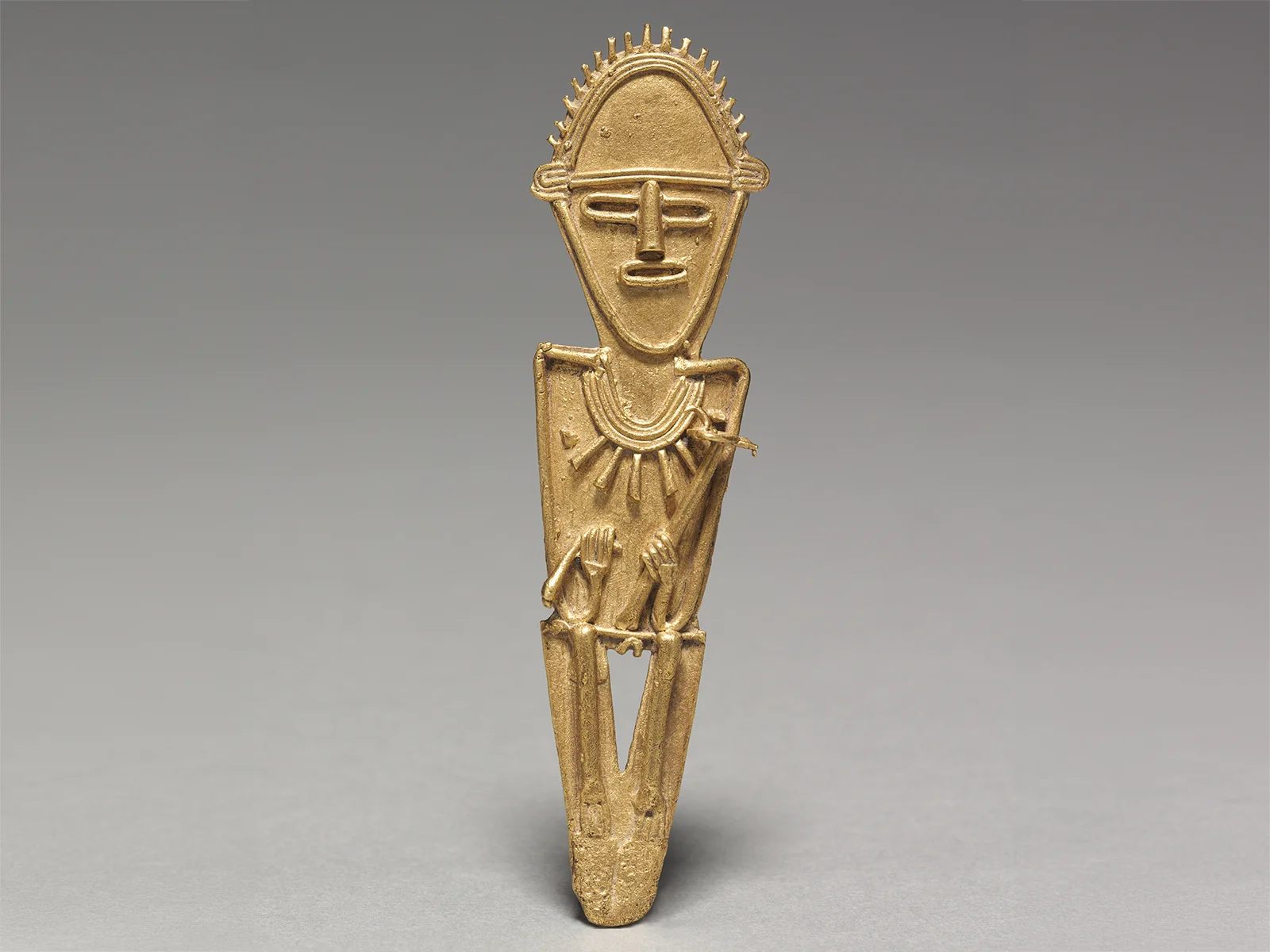
Supporting EvidenceMuisca Votive Offerings
Other Muisca votive objects show that the raft was not an isolated piece. Gold-alloy offerings belonged to a wider ceremonial tradition, with objects left at sacred places such as lakes and caves.
04Historical record
Supporting EvidenceThe Written Accounts
Colonial-era writings carried El Dorado into the written record, from stories of a gilded ruler and offerings at a sacred lake to later descriptions of Manoa in Guiana. They are central to tracing how the legend developed, though the surviving accounts do not always agree on the details.
05Recovered material
InconclusiveFinds from Guatavita
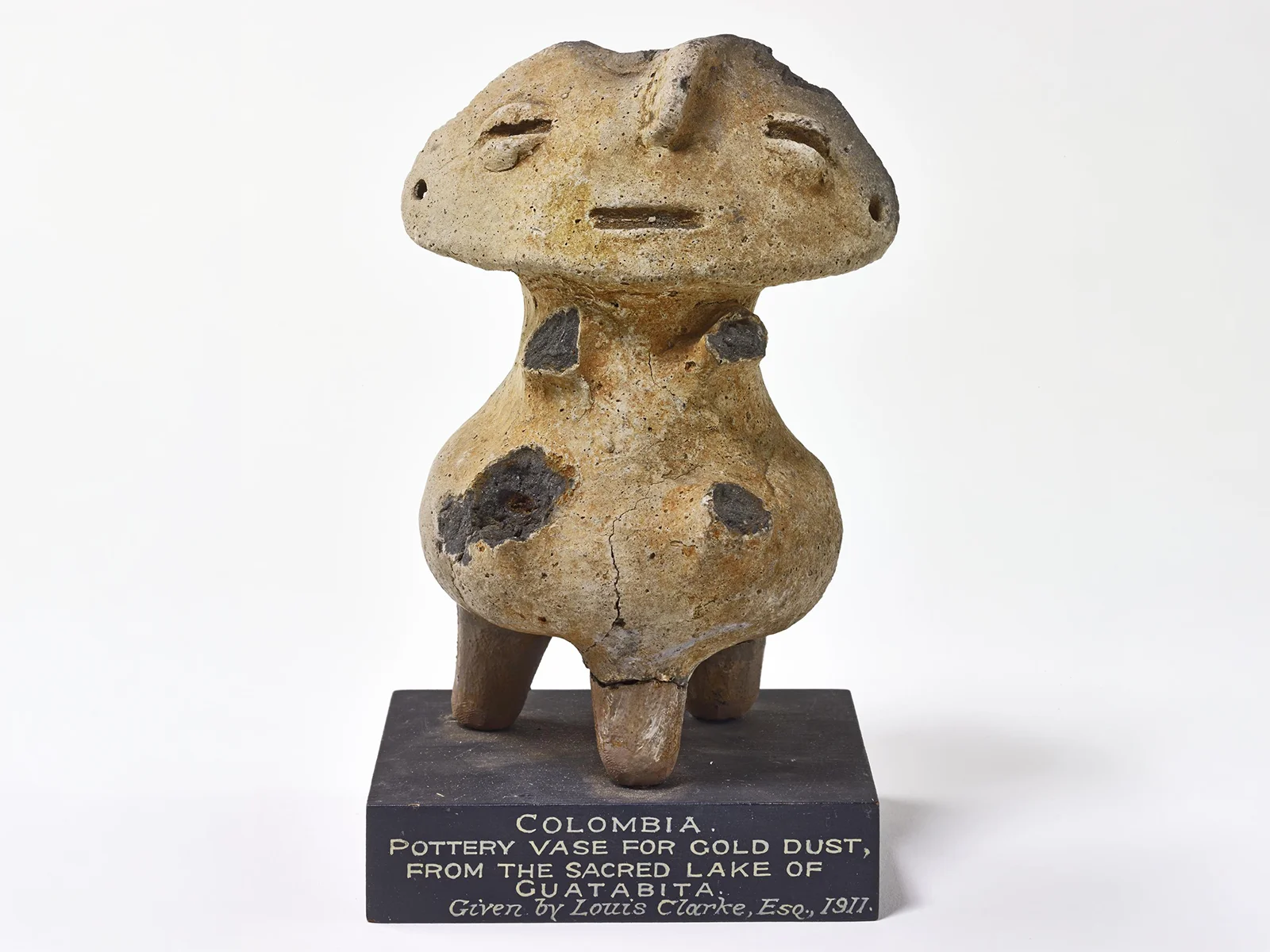
The early twentieth-century attempt to drain Lake Guatavita recovered pottery, beads and other objects associated with Muisca offering practices, but no vast hoard emerged. The finds add to the evidence for ritual offerings without resolving the legend's larger claims.
06Historical interpretation
DisputedThe Gilded Chief Ceremony
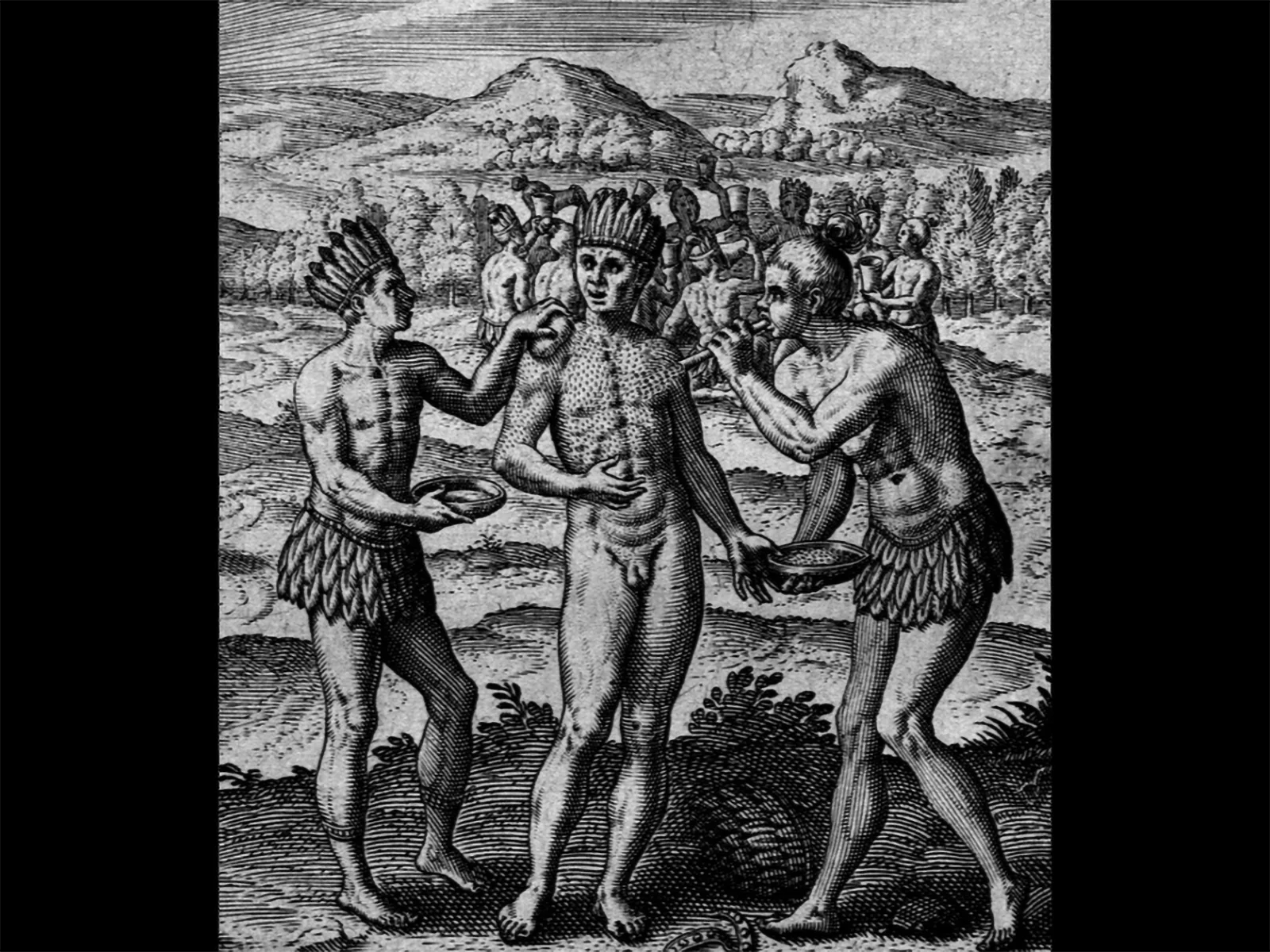
The famous story of a newly invested ruler covered in gold dust and taken out onto the lake on a raft comes principally through colonial accounts. It may preserve an older Muisca tradition, but the ceremony's exact form and details cannot be independently confirmed.
07Cartographic claim
Evidence AgainstLake Parime & Manoa
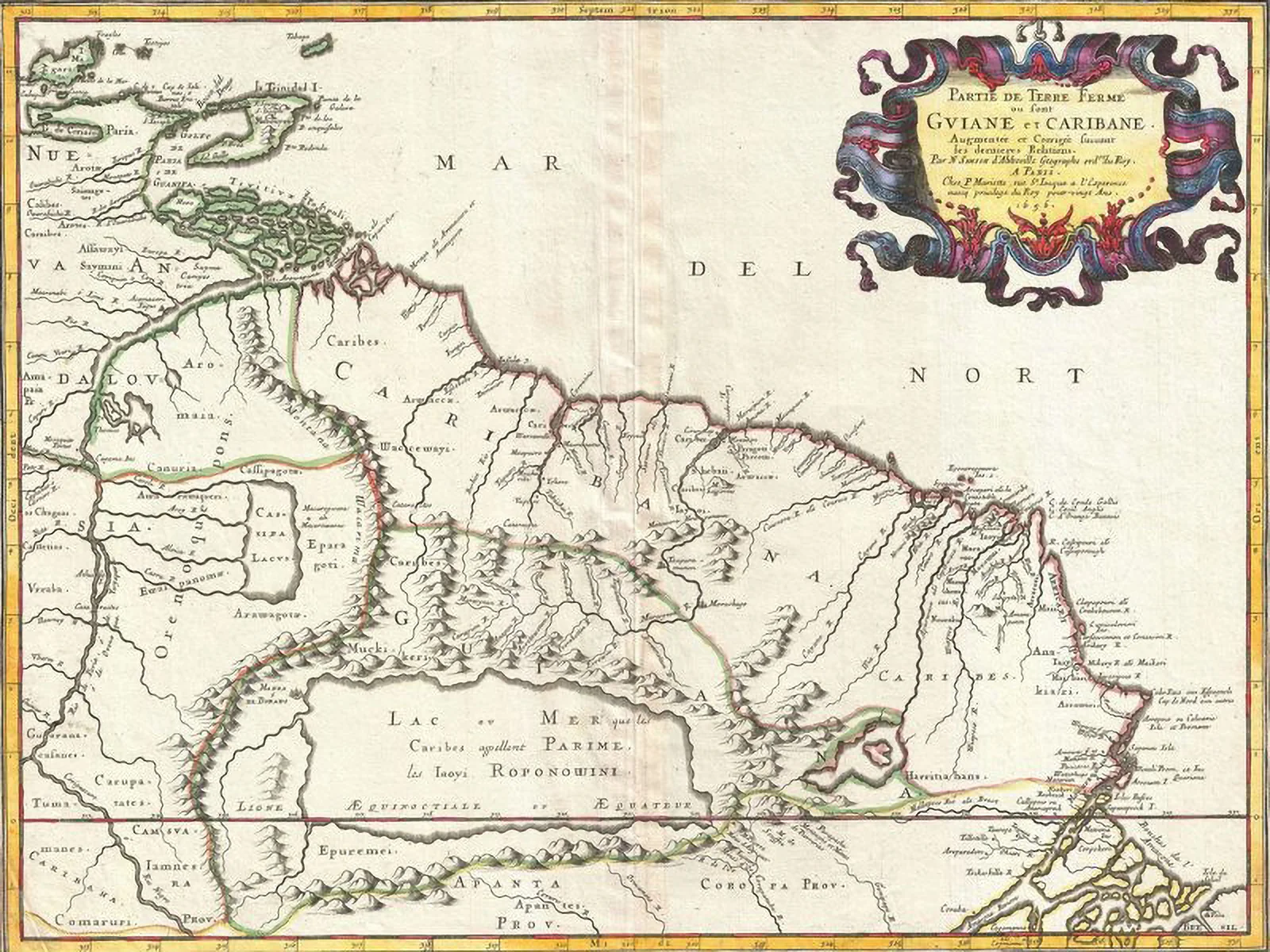
European maps placed Manoa on the shores of a vast Lake Parime in Guiana, giving El Dorado a seemingly fixed place on the map. Later exploration failed to find the landscape as it had been drawn, weakening this eastern golden-city version of the legend.
08Absence of evidence
UnsupportedThe Golden City
No archaeological discovery has established the golden city or kingdom later sought across South America. Here the trail of surviving evidence grows faint, while the legend itself grows larger.
Working Theories
Interpreting the record
What was El Dorado?
These interpretations are not equally supported. The first is the leading historical reconstruction, the second is an open possibility within the later reports, and the third is the legend in its fullest form.
01Most likely theory
Leading InterpretationThe Muisca Origin
El Dorado most likely grew from real Muisca ritual traditions, gold offerings and the material wealth Europeans encountered among Indigenous societies in northern South America.
The strongest reconstruction does not require a lost city. Sacred waters, votive metalwork and elite ceremony formed a genuine cultural setting; colonial reports appear to have compressed and enlarged those elements into the gilded chief and, eventually, a kingdom of gold.
- Grounded in
- Muisca votive metalwork, offerings at sacred places and ritual activity around Guatavita
- Best explains
- Why gold, a lake and a powerful ruler sit at the earliest centre of the story
- Still uncertain
- Whether the famous gilded-ruler ceremony occurred exactly as later writers described it
02Historical possibility
Open PossibilityThe Hidden Kingdom
Some later reports may have preserved distorted knowledge of a real, wealthy and politically organised society that explorers never successfully identified.
The belief itself was historically genuine: expeditions repeatedly followed accounts of powerful inland peoples and rich territories. This interpretation allows a real polity behind part of the later El Dorado tradition, while treating its scale and gold as exaggeration.
- Historical backing
- Accounts, expeditions and maps show that explorers believed the reports pointed to a wealthy inland kingdom
- What it proposes
- One real society lay behind some later rumours, but was never correctly located or recognised
- Current limit
- No specific settlement or kingdom has been shown to be the source of those reports
03Legendary interpretation
The LegendThe Golden City
The extraordinary hidden city, kingdom or empire sought by generations of explorers existed substantially as they imagined it and remains undiscovered.
This is the defining popular form of El Dorado. It drove expeditions and appeared on European maps, but no confirmed archaeological discovery has established the immense golden centre described by later seekers.
- Historical belief
- Well attested in accounts, expeditions and the Manoa–Lake Parime map tradition
- Archaeological support
- None confirmed
- Place in the case
- The legend itself rather than the leading historical explanation
The Search
Attempts to resolve the case
What happened when people went looking?
El Dorado was pursued through lake drainage, overland marches and river expeditions. These records focus on the attempts that materially changed where the legend was placed, what searchers expected to find or how the evidence was understood.
The search field
A target that moved when each attempt failed
Early searchers pushed east from Quito and targeted Guatavita. Later expeditions crossed Amazonia and the llanos, gathered around the Orinoco and Manoa, then returned to the lake with industrial machinery.
- Selected attempts
- 07
- Centuries represented
- 03
- Primary methods
- 03
Major search records
Objective · Method · Outcome · What changed1541–1542
No DiscoveryEast of Quito · Gonzalo Pizarro and Francisco de Orellana
Pizarro’s Eastern Expedition
Gonzalo Pizarro led a vast expedition east from Quito. Contemporary narratives place the Province of Cinnamon at its initial centre; in his 1542 letter Pizarro also described reports of the rich, populous country around the ‘Lake of El Dorado’ as a reason for the venture. Hunger, disease and terrain devastated the force, while Francisco de Orellana’s separated party continued down the Amazon.
- Objective
- The Province of Cinnamon and the rich country reported around the Lake of El Dorado
- Method
- A large overland expedition east from Quito, followed by river travel
- Outcome
- No reported destination found; the force fragmented after catastrophic losses
What changed
The expedition carried the search into the Amazonian interior and led indirectly to Orellana’s recorded descent of the Amazon to the Atlantic.
1545–1580
Partial ResultLake Guatavita · Early Spanish treasure searches
The First Guatavita Drainages
Early searchers treated Lake Guatavita itself as a recoverable treasure site. Hernán Pérez de Quesada and Lázaro Fonte made an early attempt to lower the water; after royal authorisation in 1572, Antonio de Sepúlveda later cut a major drain into the rim. Objects were recovered, but not the immense hoard the legend had come to promise.
- Objective
- The offerings believed to lie beneath Lake Guatavita
- Method
- Manual drainage followed by a large cut through the lake rim
- Outcome
- Gold and other material reported; no legendary hoard uncovered
What changed
The finds strengthened the case for real ritual deposition while separating that evidence from the much larger treasure imagined by searchers.
1560–1561
Search AbandonedAmazon Basin · Pedro de Ursúa and Lope de Aguirre
The Search for El Dorado and Omagua
Pedro de Ursúa led a river expedition in pursuit of El Dorado and the reputedly wealthy land of Omagua. Mutiny overtook the mission, Ursúa was killed and Lope de Aguirre eventually seized control; the search ended as a violent rebellion rather than an exploration.
- Objective
- El Dorado and the wealthy inland society described as Omagua
- Method
- A large river expedition through the Marañón and Amazon basin
- Outcome
- Leadership destroyed by mutiny; the original search abandoned
What changed
The expedition shows how El Dorado had already merged with reports from deep Amazonia, far beyond the Muisca setting in which the legend began.
1569–1572
No DiscoveryEastern Llanos · Gonzalo Jiménez de Quesada
Quesada’s Final Expedition
Decades after first entering Muisca territory, Gonzalo Jiménez de Quesada led a costly expedition east into the llanos. It returned in 1572 after extreme losses and without a place that could be identified as El Dorado.
- Objective
- El Dorado beyond the eastern ranges of the Andes
- Method
- A multi-year overland march through the llanos toward the Orinoco
- Outcome
- A small remnant returned; no destination or treasure was found
What changed
The attempt carried the search east of the Andes toward the Orinoco basin, but its failure did little to narrow the legend’s uncertain geography.
1584–1591
No DiscoveryMeta and Orinoco regions · Antonio de Berrío
Berrío’s Three Expeditions
Antonio de Berrío mounted three expeditions between 1584 and 1591 while following reports of a rich country beyond the Orinoco. He did not locate Manoa, but his routes, inquiries and conviction shifted the centre of the search decisively toward Guiana.
- Objective
- El Dorado or Manoa beyond the Orinoco
- Method
- Repeated overland and river exploration supported by local testimony
- Outcome
- Routes and reports gathered; no city or kingdom confirmed
What changed
Guiana and the Orinoco replaced the Colombian highlands as the principal theatre of the later El Dorado search.
1595 & 1617–1618
No DiscoveryOrinoco and Guiana · Walter Raleigh
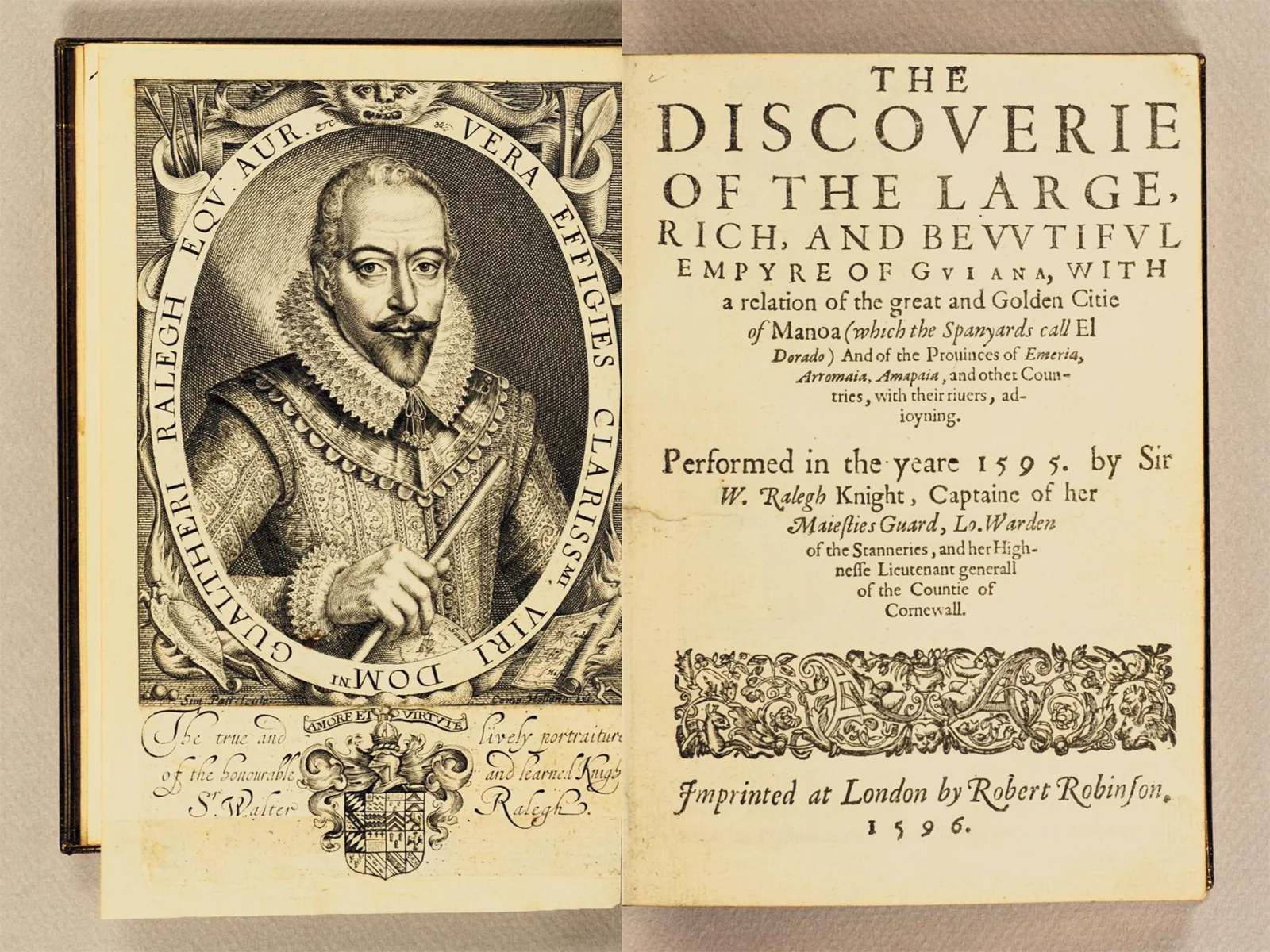
Raleigh’s Guiana Expeditions
Raleigh explored the Orinoco in 1595 and followed the voyage with The Discoverie of Guiana, presenting Manoa as a great golden empire. A second venture in 1617–1618 ended after an attack on the Spanish settlement of Santo Tomé; neither expedition verified the city.
- Objective
- Manoa, identified with the great El Dorado of Guiana
- Method
- River exploration, collected testimony and a renewed expedition
- Outcome
- No Manoa found; the second venture ended in political disaster
What changed
Raleigh’s published account gave Manoa a durable name, geography and audience within English and European versions of the legend.
1909–1912
Partial ResultLake Guatavita · British industrial drainage
The Industrial Attempt
A British company drove a tunnel beneath Lake Guatavita to drain it on an industrial scale. By 1912 much of the water had been removed, but the exposed mud hardened and frustrated excavation; material was recovered, not the expected treasure.
- Objective
- The accumulated offerings believed to cover the lakebed
- Method
- An engineered drainage tunnel followed by lakebed excavation
- Outcome
- The lake was largely drained; limited material, no great treasure
What changed
Modern engineering reached the same broad result as the colonial attempts: evidence of activity at the lake, but no legendary hoard.
The Muisca World
The culture beneath the legend
Gold meant something very different here
The Muisca were not a hidden golden empire but a network of highland chiefdoms. Their metalwork, sacred places, exchange systems and political ceremonies formed the real cultural world from which El Dorado was later reconstructed.
 Material culture
01Material and meaning
Gold & Offering
Tunjos and other metal objects were made for ceremonial use and could be deposited as offerings. Their value lay in what they represented and accomplished within ritual, not only in the quantity of gold they contained.
- Common forms
- Votive figures, containers and ceremonial ornaments
- Primary role
- Offering, petition and ritual action
02Place and belief
Sacred Landscape
Lake Guatavita belonged to a wider ritual geography. Lakes, caves and highland places could receive offerings and connect communities, leaders and the non-human world.
- El Dorado link
- Guatavita became the best-known Muisca shrine
- Wider context
- One sacred place within a much larger ceremonial landscape
03Resources and trade
Wealth & Exchange
The highland Muisca were accomplished goldworkers despite having little local gold. Much of the metal arrived through exchange from lower regions, within networks that also moved salt, emeralds and other goods.
- Regional strengths
- Agriculture, salt, emeralds and skilled production
- Gold supply
- Much of the metal reached the highlands through exchange
04Authority and ceremony
Power & Ritual
Muisca society was organised through interrelated chiefdoms rather than one unified empire. Chiefs and religious specialists used ceremony, gatherings and offerings to express authority and bind people to places and obligations.
- Political form
- Regional and local chiefdoms with overlapping relationships
- Why it matters
- The legendary ruler belongs to a political and ceremonial world
The Accounts
The surviving testimony
What did the record actually say?
These five accounts were written at different times and from different kinds of knowledge. They are presented as testimony: what each author recorded, where the information came from and how that version shaped the case.
01Early recorded report
c. 1541The gilded ruler
Gonzalo Fernández de Oviedo
Historia general y natural de las Indias
A powerful ruler was said to coat his body with resin and fine gold powder, washing it away and repeating the display.
Oviedo records a story circulating among Spaniards in Quito. In this account El Dorado is a person rather than a city, and the report does not yet place him at Guatavita or describe a raft ceremony.
- Basis of account
- Information Oviedo says came through Spaniards who had heard Indigenous reports
- Source position
- Near-contemporary to the rumour, but not an eyewitness to the ruler
- Relation to the record
- Preserves the gilded-person form before the lake and city traditions appear in fuller detail
Why it matters
It is one of the earliest detailed surviving descriptions of El Dorado and preserves the gilded-man form of the tradition with unusual clarity.
02Retrospective chronicle
c. 1589The ruler, raft & lake
Juan de Castellanos
Elegías de varones ilustres de Indias
Belalcázar was said to have heard of a ruler from the Bogotá region who went onto a lake by raft, covered in gold dust, while gold and emerald offerings were made.
Castellanos brings together the gilded ruler, a body of water, a raft, offerings and reports of regional wealth. His verse chronicle was written decades after the episode it describes.
- Basis of account
- A story attributed to information heard by Sebastián de Belalcázar
- Source position
- Retrospective; Castellanos did not witness the reported encounter
- Relation to the record
- Later Guatavita accounts preserve closely related material and add further detail
Why it matters
It preserves a version in which the gilded ruler, raft, lake, offerings and regional wealth appear together in the surviving record.
03Voyage account
1596The great golden city
Walter Raleigh
The Discoverie of Guiana
Manoa was presented as the great and golden city of a rich Guianan empire — the place the Spaniards called El Dorado.
Raleigh had travelled through Guiana and the Orinoco, but he did not reach Manoa. His case for the city combined his own journey with Spanish reports, captured correspondence and testimony gathered around the expedition.
- Basis of account
- Firsthand travel in Guiana combined with second-hand evidence for Manoa
- Source position
- Eyewitness to the region and voyage, but not to the city itself
- Relation to the record
- Connects the name El Dorado directly with Manoa and an eastern golden empire
Why it matters
It is the clearest and most influential surviving formulation of El Dorado as a magnificent city and empire rather than only a gilded ruler or lake ceremony.
04Colonial chronicle
1627Guatavita and offering practice
Fray Pedro Simón
Noticias historiales
A naked cacique was said to be covered in gold dust and to offer gold and emeralds in a lake; Simón later places the tradition within Guatavita’s ritual landscape.
Simón also describes practices that he says Spaniards witnessed around Guatavita: people travelled to the lake and ritual specialists made offerings from rafts. His account therefore preserves material of different kinds and distances from the events.
- Basis of account
- Earlier testimony, local tradition and observations connected with the lake
- Source position
- The origin story is retrospective; some offering practices were contemporary
- Relation to the record
- Shares core material with Castellanos while adding explicit Guatavita context
Why it matters
It links the golden-man tradition to Guatavita and places it alongside recorded ceremonial activity at the lake.
05Colonial narrative
1636–1638The full investiture ceremony
Juan Rodríguez Freyle
El Carnero
The heir to Guatavita’s chiefdom fasts, is covered in powdered gold, boards a decorated raft with four chiefs and casts gold and emeralds into the lake before being received as ruler.
This is the most complete version of the famous ceremony. It firmly identifies the event as the investiture of Guatavita’s successor, a political meaning that earlier chroniclers do not clearly state.
- Basis of account
- A later colonial narrative drawing on traditions and memory associated with Guatavita
- Source position
- Written roughly a century after the Spanish conquest of the Muisca
- Relation to the record
- The fullest ceremonial account and the clearest investiture interpretation
Why it matters
Its vivid account supplied the enduring image of the golden ruler, the raft, the sacred lake and the public ceremony that now defines El Dorado in historical memory.
Key Figures
People in the case
The searchers, writers and later investigators
These 15 people were selected for the distinct part each played in encountering, pursuing, recording or materially reshaping the El Dorado case. The gallery is a reference index rather than another required chapter.

01Conquistador & explorer
Sebastián de Belalcázar
c. 1490–1551
Later chroniclers place Belalcázar close to the early reports of a ruler covered in gold and to the adoption of the name El Dorado.

02Lawyer, conquistador & explorer
Gonzalo Jiménez de Quesada
c. 1506–1579
Led the expedition that entered Muisca territory in 1537 and, decades later, mounted a costly search for El Dorado in the eastern llanos.

03Chronicler & royal historian
Gonzalo Fernández de Oviedo
1478–1557
Preserved one of the earliest detailed reports of El Dorado as a ruler repeatedly covered in fine gold powder.

04Conquistador & expedition leader
Gonzalo Pizarro
1510–1548
Led the vast 1541 expedition east from Quito toward the Province of Cinnamon and reports concerning the Lake of El Dorado.

05Explorer & expedition commander
Francisco de Orellana
1511–1546
A lieutenant in Pizarro’s eastern expedition whose separated party continued downstream and completed the first recorded European navigation of the Amazon.

06Conquistador & expedition leader
Pedro de Ursúa
c. 1526–1561
Led the 1560 river expedition launched in search of El Dorado and Omagua before being killed during a mutiny.

07Soldier, mutineer & rebel
Lope de Aguirre
c. 1511–1561
Seized control after the murder of Ursúa and transformed the expedition for El Dorado and Omagua into a violent rebellion against the Spanish Crown.

08Treasure seeker
Antonio de Sepúlveda
fl. 1572–1580
Received royal authorisation in 1572 to recover gold, silver and precious stones from Lake Guatavita and later cut a major drain into its rim.

09Governor, soldier & explorer
Antonio de Berrío
1527–1597
Mounted repeated expeditions beyond the Orinoco and helped shift the later search toward Guiana, Manoa and the eastern interior.

10Chronicler, poet & priest
Juan de Castellanos
1522–1607
Recorded the influential tradition linking a gilded ruler with a raft, a lake, offerings and reports of regional wealth.

11Explorer, courtier & writer
Walter Raleigh
c. 1552–1618
Led two Guiana ventures and gave the golden city of Manoa one of its most influential written forms in The Discoverie of Guiana.

12Franciscan friar & chronicler
Fray Pedro Simón
1574–c. 1628
Connected the gilded-cacique tradition with Guatavita while also recording information about continuing offering practices around the lake.

13Writer & colonial chronicler
Juan Rodríguez Freyle
1566–c. 1642
Authored the fullest surviving version of the Guatavita ceremony, including the gilded successor, raft, four chiefs and offerings.

14Naturalist, geographer & explorer
Alexander von Humboldt
1769–1859
Examined El Dorado through geography, travel accounts and field observation, including the traditions surrounding Lake Parime and Guatavita.
15Farmer & discoverer
Cruz María Dimaté
fl. 1969
Discovered the votive deposit near Pasca that contained the Muisca Raft, bringing the case its most famous surviving object.
Swipe the gallery or use the arrows. Open a profile for the fuller case connection and direct links back into the file.